प्रस्तावना
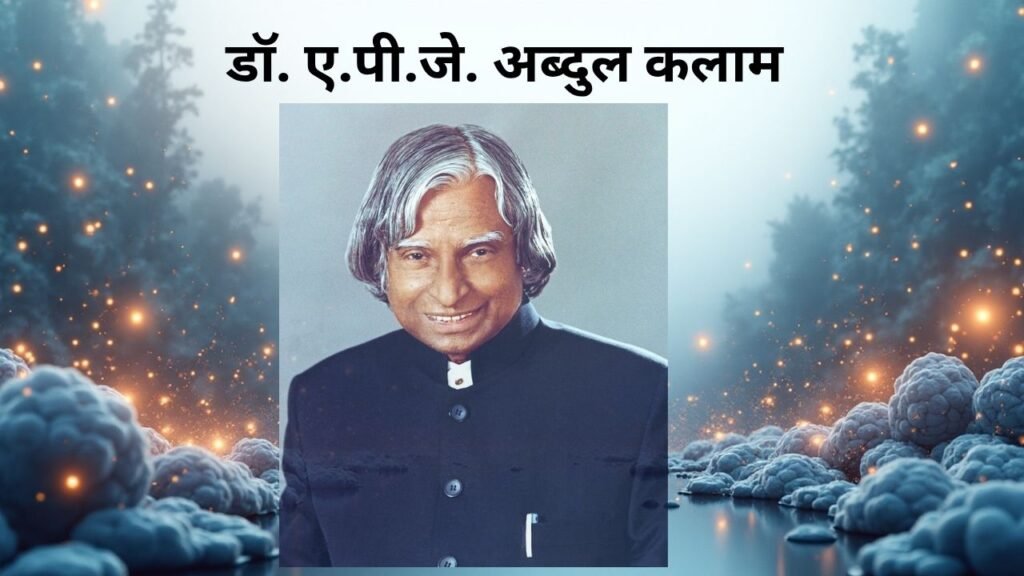
डॉ. ए.पी.जे. अब्दुल कलाम का नाम लेते ही हमारे मन में एक ऐसे महान व्यक्तित्व की छवि उभरती है, जिसने अपने जीवन के प्रत्येक क्षण को भारत के विकास और युवा शक्ति को प्रेरित करने में समर्पित कर दिया। वे न केवल एक महान वैज्ञानिक थे, बल्कि एक अद्भुत शिक्षक, विचारक, और सबसे महत्वपूर्ण — एक सच्चे भारतीय थे, जिन्होंने यह सिद्ध कर दिया कि गरीबी या सीमित साधन किसी की महानता में बाधा नहीं बन सकते।
अब्दुल कलाम का जीवन इस बात का जीवंत उदाहरण है कि यदि व्यक्ति में मेहनत, लगन, अनुशासन और राष्ट्र के प्रति समर्पण हो, तो वह किसी भी ऊँचाई को छू सकता है। वे अपने सादे जीवन, उच्च विचारों और देशभक्ति के लिए पूरे विश्व में आदरणीय हैं।
प्रारंभिक जीवन (Early Life)
डॉ. अब्दुल कलाम का पूरा नाम अवुल पकिर जैनुलाब्दीन अब्दुल कलाम था। उनका जन्म 15 अक्टूबर 1931 को तमिलनाडु राज्य के रामेश्वरम नामक छोटे से द्वीप नगर में हुआ था। उनके पिता जैनुलाब्दीन एक साधारण नाविक थे, जो तीर्थयात्रियों को समुद्र पार ले जाने का कार्य करते थे। उनकी माता आशियम्मा एक धार्मिक, दयालु और गृहिणी महिला थीं।
कलाम का बचपन अत्यंत सादगीपूर्ण और संघर्षमय था। आर्थिक रूप से उनका परिवार बहुत सम्पन्न नहीं था, परंतु उनके घर में संस्कार, धार्मिकता और मानवीय मूल्यों की कोई कमी नहीं थी। उन्होंने बचपन में अखबार बाँटकर अपने परिवार की आर्थिक मदद की। उनके जीवन की कठिनाइयाँ ही आगे चलकर उनके चरित्र की सबसे बड़ी ताकत बनीं।
शिक्षा (Education)
अब्दुल कलाम ने अपनी प्रारंभिक शिक्षा रामनाथपुरम के श्वार्ज हायर सेकेंडरी स्कूल से प्राप्त की। बचपन से ही उन्हें विज्ञान और गणित में गहरी रुचि थी। उनके शिक्षक श्री अय्यादुरै सोलोमन और श्री शिवसुब्रमण्यम अय्यर ने उनमें विज्ञान के प्रति जिज्ञासा जगाई।
उन्होंने बाद में सेंट जोसेफ कॉलेज, तिरुचिरापल्ली से भौतिकी (Physics) में स्नातक की डिग्री प्राप्त की। इसके बाद उन्होंने मद्रास इंस्टीट्यूट ऑफ टेक्नोलॉजी (MIT) से एरोनॉटिकल इंजीनियरिंग की पढ़ाई की। यहीं से उनके जीवन का रुख विज्ञान और प्रौद्योगिकी की दिशा में मुड़ गया।
वैज्ञानिक जीवन की शुरुआत (Beginning of Scientific Career)
अब्दुल कलाम अपनी पढ़ाई पूरी करने के बाद अब्दुल कलाम ने 1958 में रक्षा मंत्रालय के अधीन कार्यरत “रक्षा अनुसंधान एवं विकास संगठन” (DRDO) में वैज्ञानिक के रूप में अपना करियर शुरू किया। यहाँ वे विमान डिजाइन परियोजना पर काम करने लगे, लेकिन उनका मन रॉकेट और अंतरिक्ष विज्ञान की ओर अधिक आकर्षित था।
1962 में वे भारतीय अंतरिक्ष अनुसंधान संगठन (ISRO) में शामिल हुए। यहाँ उन्होंने भारत के पहले स्वदेशी उपग्रह प्रक्षेपण यान (SLV-III) के निर्माण में प्रमुख भूमिका निभाई। उनके नेतृत्व में 18 जुलाई 1980 को भारत का पहला उपग्रह “रोहिणी” सफलतापूर्वक अंतरिक्ष में प्रक्षेपित किया गया।
‘मिसाइल मैन ऑफ इंडिया’ की उपाधि (Missile Man of India)
ISRO में सफलता के बाद अब्दुल कलाम को रक्षा क्षेत्र में कार्य करने के लिए DRDO में स्थानांतरित किया गया, जहाँ उन्होंने भारत की मिसाइल विकास परियोजनाओं (Integrated Guided Missile Development Program – IGMDP) का नेतृत्व किया।
उनके मार्गदर्शन में भारत ने कई महत्वपूर्ण मिसाइलों का निर्माण किया, जैसे —
- अग्नि (Agni) – मध्यम दूरी की बैलिस्टिक मिसाइल
- पृथ्वी (Prithvi) – कम दूरी की सामरिक मिसाइल
- त्रिशूल, आकाश, और नाग मिसाइलें
इन्हीं उपलब्धियों के कारण उन्हें पूरे देश में “मिसाइल मैन ऑफ इंडिया” के नाम से जाना जाने लगा।
पोखरण परमाणु परीक्षण (Pokhran Nuclear Test)
1998 में जब भारत ने राजस्थान के पोखरण में परमाणु परीक्षण (Pokhran-II) किया, तब डॉ. कलाम इस मिशन के मुख्य वैज्ञानिक सलाहकार थे। इस परीक्षण ने भारत को दुनिया के परमाणु संपन्न राष्ट्रों की श्रेणी में शामिल कर दिया।
इस सफलता के बाद डॉ. कलाम विश्वभर में “भारत की सामरिक शक्ति के निर्माता” के रूप में प्रसिद्ध हुए। उन्होंने यह भी स्पष्ट किया कि भारत की परमाणु शक्ति शांति और आत्मरक्षा के लिए है, आक्रमण के लिए नहीं।
भारत के राष्ट्रपति (President of India)
25 जुलाई 2002 को अब्दुल कलाम भारत के 11वें राष्ट्रपति बने। उन्हें जनता ने “जनता के राष्ट्रपति (People’s President)” के रूप में अपनाया, क्योंकि वे हमेशा जनता के बीच रहना, छात्रों से मिलना, और समाज की समस्याओं को समझना पसंद करते थे।
उनका राष्ट्रपति काल (2002–2007) भारतीय राजनीति के इतिहास में स्वर्णिम अध्याय माना जाता है। उन्होंने राष्ट्रपति भवन के दरवाजे आम जनता के लिए खोल दिए और देशभर के छात्रों से सीधे संवाद शुरू किया।
उनका मानना था कि —
“राष्ट्र की सबसे बड़ी संपत्ति उसके युवा हैं, और उनकी सबसे बड़ी शक्ति उनका ज्ञान है।”
राष्ट्र के लिए उनका दृष्टिकोण (Vision for the Nation)
डॉ. कलाम का सपना था कि भारत 2020 तक एक विकसित राष्ट्र बने। उन्होंने इस विषय पर अपनी प्रसिद्ध पुस्तक “India 2020: A Vision for the New Millennium” लिखी, जिसमें उन्होंने विज्ञान, शिक्षा, कृषि, और आत्मनिर्भरता पर आधारित विकास की योजना प्रस्तुत की।
उनका नारा था —
“Dream, Dream, Dream! Dreams transform into thoughts and thoughts result in action.”
वे मानते थे कि हर व्यक्ति को बड़े सपने देखने चाहिए, क्योंकि बड़े सपने ही महान उपलब्धियों की शुरुआत होते हैं।
अब्दुल कलाम शिक्षा के प्रति समर्पण (Dedication to Education)
राष्ट्रपति पद से निवृत्त होने के बाद डॉ. कलाम ने अपना संपूर्ण जीवन छात्रों को प्रेरित करने के लिए समर्पित कर दिया। वे विभिन्न विश्वविद्यालयों और संस्थानों में जाकर व्याख्यान देते थे।
उन्होंने कहा था —
“यदि आपको अपने सपनों को सच करना है, तो सबसे पहले जागना होगा।”
उनका मानना था कि शिक्षा का उद्देश्य केवल रोजगार पाना नहीं, बल्कि चरित्र निर्माण, आत्मनिर्भरता, और राष्ट्र सेवा की भावना विकसित करना होना चाहिए।
अब्दुल कलाम उनकी प्रमुख पुस्तकें (Major Books by Dr. Kalam)
डॉ. कलाम ने कई प्रेरणादायक पुस्तकें लिखीं, जिनमें से कुछ प्रमुख हैं —
- Wings of Fire (1999) – आत्मकथा, जो हर छात्र को पढ़नी चाहिए।
- Ignited Minds (2002) – युवाओं को जागरूक करने वाली पुस्तक।
- India 2020 (1998) – भारत के विकास का सपना।
- My Journey (2013) – जीवन के अनुभवों पर आधारित।
- Turning Points – उनके राष्ट्रपति काल की झलकियाँ।
इन पुस्तकों में उन्होंने अपने अनुभव, विचार और जीवन दर्शन साझा किया, जो हर व्यक्ति को प्रेरित करते हैं।
अब्दुल कलाम उनके विचार (Inspirational Thoughts)
डॉ. कलाम के कुछ अमर विचार आज भी हमें मार्गदर्शन देते हैं —
- “सपना वो नहीं जो आप सोते समय देखते हैं, सपना वो है जो आपको सोने नहीं देता।”
- “अगर आप सूरज की तरह चमकना चाहते हैं, तो पहले सूरज की तरह जलना सीखिए।”
- “महान सपनों वाले लोगों के महान कार्य होते हैं।”
- “शिक्षक समाज का निर्माता होता है।”
- “आपका भविष्य आपके आज के विचारों से बनता है।”
व्यक्तित्व और जीवनशैली (Personality and Lifestyle)
डॉ. कलाम का जीवन अत्यंत सादगीपूर्ण था। राष्ट्रपति बनने के बाद भी उन्होंने विलासिता से दूरी बनाए रखी। उनके पास निजी संपत्ति लगभग न के बराबर थी। वे केवल कुछ किताबें, कपड़े, और एक छोटा बैग रखते थे।
उनका व्यवहार इतना सरल था कि कोई भी व्यक्ति उनसे बिना झिझक बात कर सकता था। वे हमेशा मुस्कराते रहते और अपने चारों ओर सकारात्मक ऊर्जा फैलाते।
सम्मान और पुरस्कार (Awards and Honours)
उनकी महान सेवाओं के लिए उन्हें अनेक राष्ट्रीय और अंतरराष्ट्रीय पुरस्कारों से सम्मानित किया गया, जिनमें प्रमुख हैं —
- भारत रत्न (1997) – भारत का सर्वोच्च नागरिक सम्मान
- पद्म भूषण (1981)
- पद्म विभूषण (1990)
- वॉन ब्राउन अवॉर्ड
- किंग चार्ल्स अवॉर्ड (UK)
- 40 से अधिक विश्वविद्यालयों से मानद डॉक्टरेट की उपाधि
अंतिम क्षण (Last Moments)
27 जुलाई 2015 को जब वे आईआईएम शिलांग में छात्रों को “Creating a Livable Planet Earth” विषय पर व्याख्यान दे रहे थे, तभी मंच पर ही उन्हें हृदयाघात हुआ और वे गिर पड़े।
उन्हें अस्पताल ले जाया गया, लेकिन डॉक्टर उन्हें बचा नहीं सके।
उनकी मृत्यु भी उनके जीवन की तरह प्रेरणादायक थी — वे उसी काम को करते हुए इस दुनिया से विदा हुए, जो उन्हें सबसे प्रिय था – “शिक्षा देना।”
भारत और विश्व पर प्रभाव (Impact on India and the World)
डॉ. कलाम ने करोड़ों युवाओं को यह विश्वास दिलाया कि “हर भारतीय में एक अग्नि है, जो यदि प्रज्वलित हो जाए तो देश को महान बना सकती है।”
उनकी प्रेरणा ने विज्ञान, शिक्षा, और राष्ट्रभक्ति को एक नई दिशा दी।
आज भी उनके विचार स्कूलों, कॉलेजों और सरकारी योजनाओं में गूंजते हैं। उनके नाम पर सैकड़ों संस्थान, पुरस्कार, छात्रवृत्तियाँ और विज्ञान कार्यक्रम चलाए जा रहे हैं।
डॉ. कलाम का युवाओं के लिए संदेश (Message for Youth)
डॉ. कलाम हमेशा युवाओं को यह संदेश देते थे —
“युवाओं! अपने सपनों को अपने जीवन का लक्ष्य बनाओ। उस पर काम करो, संघर्ष करो, और तब तक मत रुको जब तक उसे हासिल न कर लो।”
उनका यह संदेश हर युवा के लिए प्रेरणा का स्रोत है कि कड़ी मेहनत, ईमानदारी, और आत्मविश्वास से कुछ भी असंभव नहीं।
निष्कर्ष (Conclusion)
डॉ. ए.पी.जे. अब्दुल कलाम का जीवन एक प्रेरणा है —
गरीबी में जन्मे एक साधारण बालक से लेकर भारत के सर्वोच्च पद राष्ट्रपति तक की उनकी यात्रा हमें सिखाती है कि सच्ची सफलता मेहनत, अनुशासन और ईमानदारी से ही मिलती है।
वे केवल एक वैज्ञानिक या राष्ट्रपति नहीं थे, बल्कि “भारत के आत्मा के प्रतिनिधि” थे — जो हर भारतीय के दिल में आज भी जीवित हैं।
उनकी यह पंक्तियाँ हमेशा याद रहेंगी —
“मेरा जीवन एक मिशन है — भारत को महान बनाना। और यदि मैं इस मिशन में सफल नहीं हुआ, तो भी मैं यह कहूँगा कि मैंने अपने देश से प्रेम किया।”
डॉ. कलाम युगों तक प्रेरणा स्रोत रहेंगे —
एक ऐसे व्यक्ति के रूप में जिन्होंने भारत को “सपनों का देश” बनाया और युवाओं को “सपनों का योद्धा” बनने की राह दिखा

🌟 Dr. A.P.J. Abdul Kalam – The Missile Man of India
Introduction
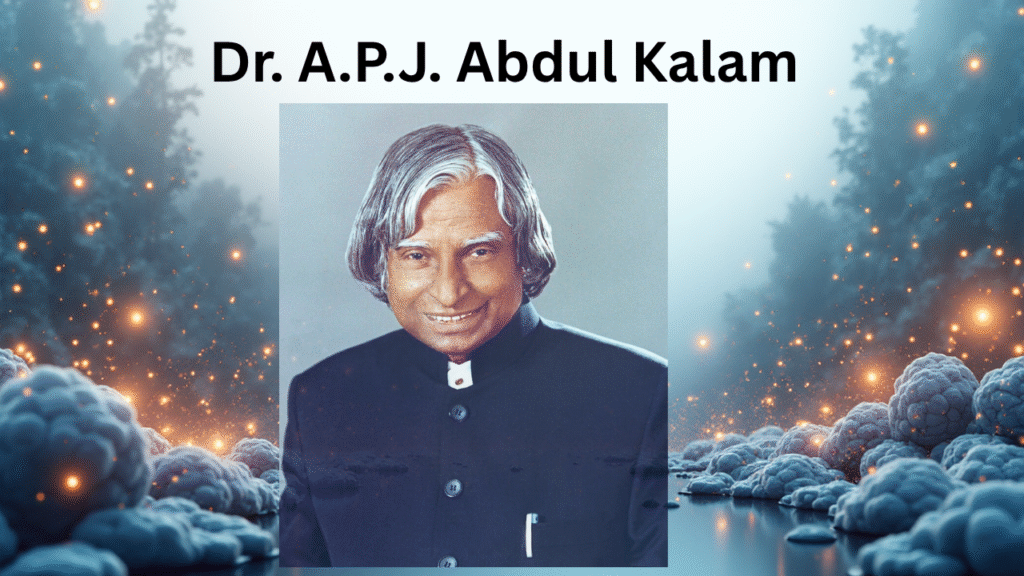
Dr. Avul Pakir Jainulabdeen Abdul Kalam, fondly remembered as the “Missile Man of India,” was one of the greatest sons of the Indian soil. He was a visionary scientist, an inspiring teacher, a humble leader, and above all, a true patriot whose entire life was dedicated to the service of the nation.
Born into poverty, raised with values, and driven by determination, he rose from humble beginnings to become not only a world-renowned scientist but also the 11th President of India and the recipient of the nation’s highest civilian honour, the Bharat Ratna.
Dr. Kalam’s life was a story of struggle, perseverance, and purpose. He proved that no dream is too big and no goal is too distant if one is willing to work hard and stay honest. His life and teachings continue to inspire millions of students and professionals across the world.
Early Life and Family Background
Dr. A.P.J. Abdul Kalam was born on October 15, 1931, in a small coastal town called Rameswaram in the Tamil Nadu state of India. His father, Jainulabdeen, was a boat owner who ferried Hindu pilgrims across the sea between Rameswaram and Dhanushkodi. His mother, Ashiamma, was a homemaker, known for her kindness and simplicity.
The family lived a modest life. They were not financially well-off, but their home was filled with values, discipline, and devotion. Kalam’s parents taught him the importance of honesty, faith, and hard work.
As a child, Kalam was deeply influenced by the serene environment of Rameswaram, the teachings of his parents, and the communal harmony among people of different religions. Despite his poor background, he was a curious and bright student who dreamt of flying airplanes and exploring the skies.
Education
Dr. Kalam began his education at Schwartz Higher Secondary School in Ramanathapuram. He was an average student in his early years but very hardworking and determined. His teachers recalled him as a student full of curiosity, always asking questions about how things worked.
One of his teachers, Mr. Sivasubramania Iyer, played a significant role in shaping his future. He encouraged young Kalam to dream big and think scientifically.
After completing school, Kalam joined St. Joseph’s College, Tiruchirappalli, where he earned a degree in Physics in 1954. Later, he moved to Madras Institute of Technology (MIT) to study Aeronautical Engineering.
At MIT, his dedication and technical brilliance impressed his professors. They saw in him a future scientist who would make a difference in the field of aerospace. His years at MIT laid the foundation for his future achievements in India’s space and missile programs.
Early Career and Entry into ISRO
After completing his engineering studies in 1958, Dr. Kalam joined the Defence Research and Development Organisation (DRDO) as a scientist. Initially, he worked on designing small aircraft models, but his interest soon shifted toward rocketry and missile technology.
In 1962, he joined the Indian Space Research Organisation (ISRO), where he played a pivotal role in India’s satellite launch vehicle program. He became the Project Director of India’s first Satellite Launch Vehicle (SLV-III). Under his leadership, India successfully launched the “Rohini” satellite into orbit in 1980, marking India’s entry into the space age.
This achievement brought great pride to the nation and established Dr. Kalam as one of India’s most promising space scientists.
The Missile Man of India
After his success at ISRO, Dr. Kalam was transferred back to DRDO in the early 1980s to lead the country’s Integrated Guided Missile Development Programme (IGMDP). This ambitious project aimed to make India self-reliant in missile technology.
Under his leadership, India developed several indigenous missiles, such as:
- Agni – an intermediate-range ballistic missile
- Prithvi – a short-range surface-to-surface missile
- Trishul, Akash, and Nag – tactical missiles for various defence purposes
These achievements earned him the title “Missile Man of India.”
Dr. Kalam’s contribution to India’s defence and strategic capabilities made the nation stronger and more self-reliant. His success also demonstrated that with dedication and teamwork, India could achieve technological excellence without depending on foreign assistance.
Pokhran Nuclear Tests (1998)
One of Dr. Kalam’s greatest contributions came in 1998, when India conducted its second nuclear tests at Pokhran in Rajasthan. As the Chief Scientific Advisor to the Prime Minister and the Head of the Defence Research and Development Organisation (DRDO), Dr. Kalam was a key figure behind these successful nuclear tests.
The operation, codenamed Pokhran-II, made India a nuclear power and placed it among the select group of nations capable of producing and testing nuclear weapons.
Dr. Kalam’s calm leadership, technical expertise, and ability to manage secrecy were vital to the mission’s success. He described that day as one of the proudest moments of his life.
These tests demonstrated India’s determination to safeguard its national security while maintaining peace and stability in the region.
Dr. Kalam as the President of India (2002–2007)
In 2002, Dr. A.P.J. Abdul Kalam was elected as the 11th President of India with overwhelming support from all political parties. His nomination was welcomed by citizens across the nation because he symbolized knowledge, integrity, and patriotism.
During his presidency, Dr. Kalam became widely known as “The People’s President.” He broke traditional barriers and interacted directly with citizens, especially students. He believed that young minds were the key to transforming India into a developed nation.
Unlike previous presidents, he preferred to meet schoolchildren, attend educational events, and inspire the youth. He often said:
“Dream, dream, dream. Dreams transform into thoughts, and thoughts result in action.”
His humility, honesty, and vision brought new respect to the office of the President. He lived in Rashtrapati Bhavan simply, with few personal belongings, and always maintained his down-to-earth nature.
Vision 2020 – Dream for a Developed India
Dr. Kalam was not only a scientist and leader but also a visionary. He dreamt of transforming India into a “Developed Nation by the year 2020.”
In his famous book “India 2020: A Vision for the New Millennium”, co-authored with Y.S. Rajan, he presented a roadmap for national development through advancements in science, education, agriculture, and technology.
He believed that India’s youth had the potential to drive the nation toward progress. His vision emphasized:
- Self-reliance in technology and defence
- Quality education for all
- Rural development and urban balance
- Eradication of poverty and illiteracy
- Clean environment and sustainable growth
Dr. Kalam’s dream continues to motivate policymakers, educators, and students even today.
His Role as a Teacher and Motivator
After completing his tenure as President in 2007, Dr. Kalam did not retire from public life. Instead, he devoted himself entirely to education and mentoring the youth.
He became a visiting professor at several prestigious institutions, including the Indian Institute of Management (IIMs) and Anna University. He loved interacting with students and inspiring them to think creatively.
He once said:
“Teaching is the most noble profession. A teacher has the power to ignite the minds of generations.”
Dr. Kalam considered himself first and foremost a teacher, even more than a scientist or a president. His speeches were full of motivation, moral values, and optimism. He always encouraged students to believe in themselves, work hard, and serve the nation.
Major Books by Dr. A.P.J. Abdul Kalam
Dr. Kalam was also a prolific writer. Through his books, he shared his life experiences, philosophy, and dreams for the future. Some of his most popular works include:
- Wings of Fire (1999) – His autobiography that narrates his journey from a poor boy in Rameswaram to becoming India’s leading scientist.
- Ignited Minds (2002) – A call to the youth of India to dream big and work for a better nation.
- India 2020 (1998) – His vision of transforming India into a developed country.
- My Journey (2013) – Personal experiences and life lessons in a simple style.
- Turning Points (2012) – The sequel to Wings of Fire, highlighting his presidency years.
- Guiding Souls and Mission India – Books focusing on spiritual and developmental growth.
These books continue to inspire readers worldwide, especially young students.
Philosophy and Beliefs
Dr. Kalam’s philosophy was rooted in simplicity, humility, and spirituality. Though a Muslim by birth, he respected all religions equally and often quoted from the Bhagavad Gita, Bible, and Quran. He believed in the unity of mankind and often said:
“For great men, religion is a way of making friends; small people make religion a fighting tool.”
He practiced meditation, maintained discipline, and led a life free from luxury and materialism.
He was a firm believer in karma (action) and self-reliance. He taught that success comes only through continuous effort, perseverance, and faith in God.
His Famous Quotes
Some of his most inspiring quotes are:
- “Dream is not what you see in sleep, dream is something that does not let you sleep.”
- “If you want to shine like a sun, first burn like a sun.”
- “You have to dream before your dreams can come true.”
- “Excellence is a continuous process and not an accident.”
- “All of us do not have equal talent, but all of us have an equal opportunity to develop our talents.”
- “Let us sacrifice our today so that our children can have a better tomorrow.”
These quotes continue to motivate millions of people to this day.
Awards and Achievements
Dr. Kalam received numerous awards and honours during his lifetime for his contributions to science, technology, and national development. Some of his major recognitions include:
- Bharat Ratna (1997) – India’s highest civilian award
- Padma Bhushan (1981)
- Padma Vibhushan (1990)
- Von Braun Award (2013) from the National Space Society (USA)
- Honorary doctorates from over 40 universities across the globe
His life and achievements made him one of the most respected Indians of all time.
His Simplicity and Lifestyle
Despite his fame and success, Dr. Kalam remained extremely humble. He never married, lived a simple life, and owned very few personal possessions — mainly books, a few clothes, and a veena (a musical instrument).
Even as President, he preferred simple vegetarian meals, made his own bed, and personally wrote letters to students and citizens. His humility made him loved by people from all walks of life.
Final Years and Death
On July 27, 2015, Dr. Kalam was delivering a lecture at the Indian Institute of Management (IIM) Shillong on the topic “Creating a Livable Planet Earth.” While speaking to students, he suddenly collapsed on stage due to cardiac arrest.
He was immediately taken to the hospital, but doctors declared him dead. His last moments reflected his lifelong mission — teaching and inspiring students.
Dr. Kalam’s death was mourned by millions of Indians. The Government of India declared a seven-day national mourning. He was buried in Rameswaram with full state honours, and thousands of people attended his funeral to pay their respects.
Legacy and Impact
Dr. A.P.J. Abdul Kalam’s legacy is everlasting. He left behind not just scientific achievements but a philosophy of life that continues to inspire generations.
His legacy includes:
- Advancing India’s missile and space programs
- Promoting scientific temperament and innovation
- Inspiring youth through education
- Advocating for peace, unity, and development
Several universities, scholarships, research centers, and awards have been named in his honour, including the Dr. A.P.J. Abdul Kalam Technical University (AKTU) in Uttar Pradesh and the Kalam National Innovation Awards.
Even today, his birthday (October 15) is celebrated as World Students’ Day in recognition of his love for students and education.
Dr. Kalam’s Message to Youth
Throughout his life, Dr. Kalam encouraged the youth to take responsibility for building a better nation. His most famous message was:
“You have to dream before your dreams can come true. Set your goal, acquire knowledge, work hard, and never give up.”
He believed that the power of youth could transform India into a developed nation. He always emphasized the four essential qualities for success: Curiosity, Creativity, Courage, and Confidence.
Conclusion
Dr. A.P.J. Abdul Kalam’s life is a guiding light for every individual who aspires to achieve greatness. From a small boy selling newspapers in Rameswaram to becoming the President of India, his journey proves that dreams can indeed become reality if pursued with determination, discipline, and devotion.
He was not only the “Missile Man” but also the “People’s President”, a philosopher, a guide, and a true servant of humanity.
In his own words:
“My life is a message — dream, think, and work for the nation. If I die, my soul will continue to serve my motherland.”
Dr. Kalam may no longer be with us physically, but his ideas, values, and vision will continue to live in the hearts of millions forever.
He will always be remembered as the man who gave wings to India’s dreams — a scientist who touched the sky but kept his feet firmly on the ground.